
A hand shaped like a hand
What “anthropomorphic” means here
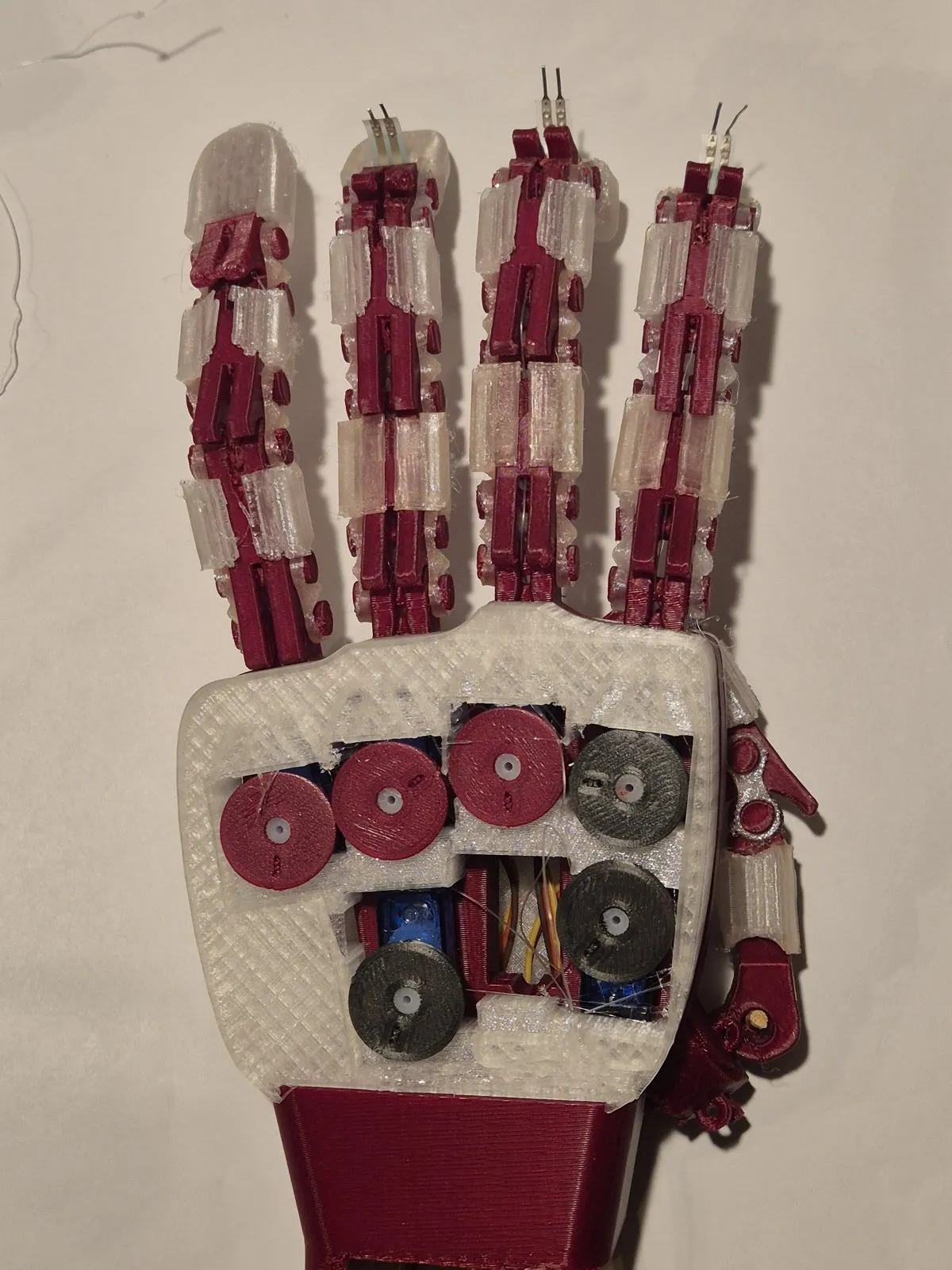
The simple hand has five identical fingers in a row. This one copies the layout of a human hand:
- every finger has its own length and width, roughly in human proportions,
- the knuckle line is stepped: the middle finger reaches furthest, the little finger is shortest and sits further back,
- the thumb has three bones and, most importantly, a second motion: opposition.
The principle of moving the fingers is the same as in the simple hand: a braided-line tendon on the palm side of each finger, wound by a servo spool in the forearm, and elastic cord on the back pulling the finger straight again.
The thumb: why opposition matters
Try picking up a coin with your thumb held flat beside your hand. You cannot. To pinch, your thumb must swing in front of the palm so its tip can meet a fingertip. That swing is called opposition, and it is what makes human hands so good at holding things.
This hand has six servos: five curl the fingers and the thumb, and the sixth sits inside the palm and rotates the thumb’s base to swing it in front of the palm.
Grips, not just gestures
Researchers sort the ways we hold things into a handful of basic grips. The firmware has the most useful ones, each a set of six values from 0 to 1:
| Grip | Use | Thumb |
|---|---|---|
| power | a bottle, a handle: all fingers around the object | partly in front |
| pinch | a coin, a pen tip: thumb meets index | fully in front |
| tripod | a pencil: thumb, index and middle | fully in front |
| lateral | a key, a card: thumb presses on the side of the index | beside the palm |
| hook | a bag handle: fingers curled, thumb out of the way | beside the palm |
| point, peace, open | gestures |
Planning the thumb’s path
If the thumb curls and swings at the same time, the curled thumb can crash into the index finger on its way across the palm. So when a grip change moves the opposition a lot, the firmware does it in three steps:
- straighten the thumb (the fingers stay where they are),
- swing the thumb to its new position,
- move everything to the final grip.
Small opposition changes (less than 0.2) go directly.
What is in this guide
- A hand shaped like a hand (this chapter, free)
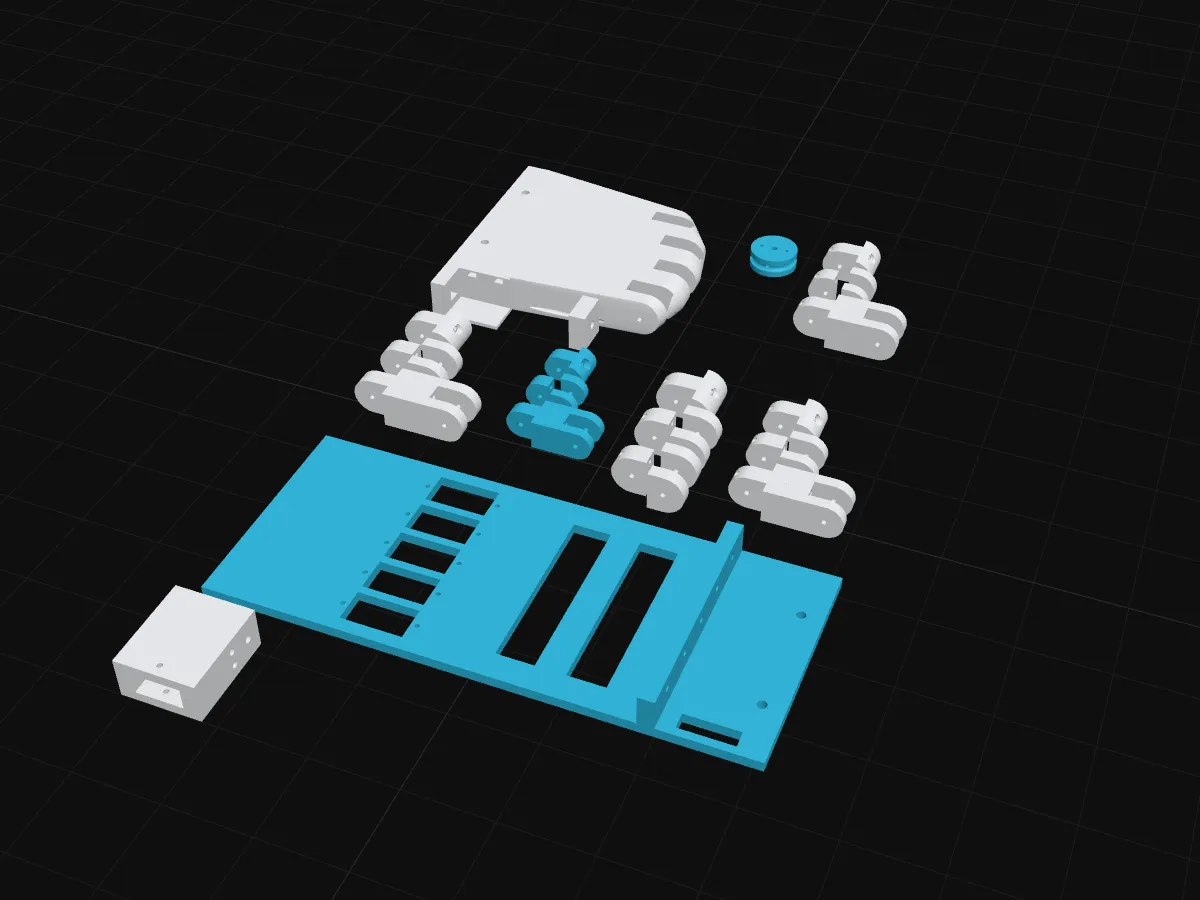
- Parts and printing (the hardest print in the series)
- Assembly: fingers, the thumb base, tendons, wiring
- The code: grips, transitions, calibration
- Troubleshooting and what next
If you have not built a tendon-driven hand before, the simple hand’s guide explains the tendon maths and the basic assembly in more detail.

